Health & Medicine

AI-based characterization of Alzheimer's disease phenotypes from population-scale single-cell data.
| Source: Nature medicine

The complexity of Alzheimer's disease (AD) manifests in diverse clinical phenotypes, including cognitive impairment and neuropsychiatric symptoms. However, the etiology of these phenotypes remains elusive. To address this, the PsychAD project generated a population-level single-nucleus RNA sequencing dataset comprising over 6 million nuclei from the prefrontal cortex of >1,000 individual brains, covering a variety of disease phenotypes. Here, leveraging this dataset, we developed a com

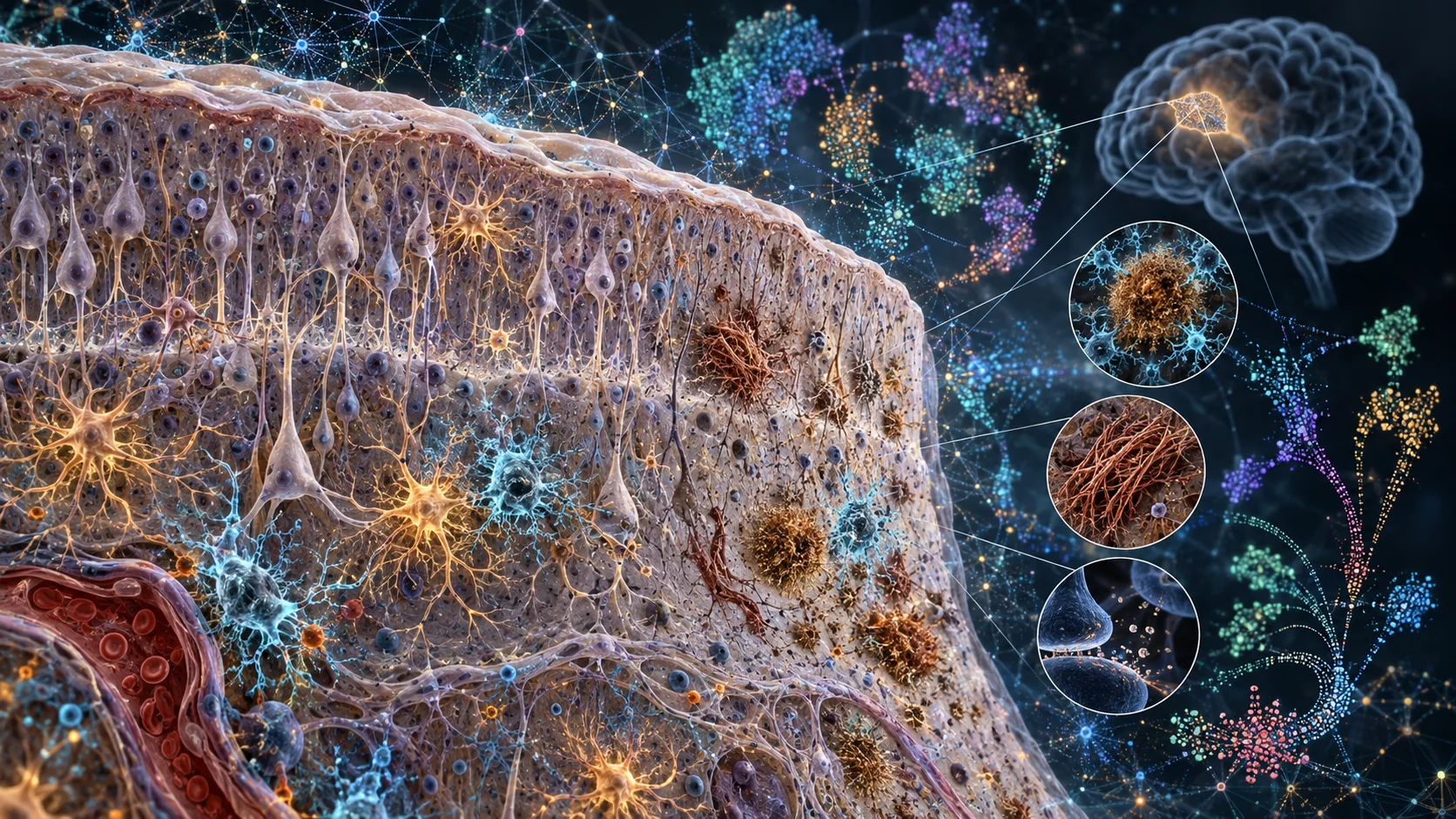
The complexity of Alzheimer's disease (AD) manifests in diverse clinical phenotypes, including cognitive impairment and neuropsychiatric symptoms. However, the etiology of these phenotypes remains elusive. To address this, the PsychAD project generated a population-level single-nucleus RNA sequencing dataset comprising over 6 million nuclei from the prefrontal cortex of >1,000 individual brains, covering a variety of disease phenotypes. Here, leveraging this dataset, we developed a computational framework, called Phenotype Associated Single Cell encoder (PASCode), to score single-cell phenotype associations, and identified ∼1.5 million phenotype-associated cells (PACs) from 584 donors with AD-related phenotypes. PASCode ensembles multiple statistical methods into a graph neural model for robust scoring. Comparing PACs within 27 brain cell subclasses, we prioritized cell subpopulations and their expressed genes for various AD phenotypes. For instance, we identified microglia subpopulations implicated in AD pathology; reactive astrocyte subtypes with altered neuroprotective and neurotoxic gene expression that likely confer cognitive resilience; and enhanced excitatory/inhibitory imbalance and mitochondrial dysfunction in cognitively impaired AD donors. We also identified many PACs for multiple phenotypes, including the astrocytes between AD and depression showing specific gene expression patterns such as inflammation and endoplasmic reticulum stress pathways. These prioritized subpopulations, genes and pathways potentially offer valuable insights for precision diagnostic and therapeutic development. We also validated our findings in external population-scale datasets including AD and major depressive disorder, compiled an AD-phenotypic single-cell atlas and delivered the framework as an open-source tool with pre-trained models and a web application for community use.

Read the original source →

Related Stories

Health & Medicine

The honey bee stinger: An unusual pump with collapsible double pistons.

Most stinging animals deliver venom by contracting muscles around a venom reservoir, but honey bees employ a fundamentally different strategy. The stingers of worker bees have the unique ability to autotomize, separating from the body, to continue to sting independently. Despite more than a century of anatomical descriptions, the mechanics of venom pumping have remained unresolved due to the challenges of observing them in action. We recorded high-speed videos of active, autotomized stingers, co

Continue reading
Health & Medicine

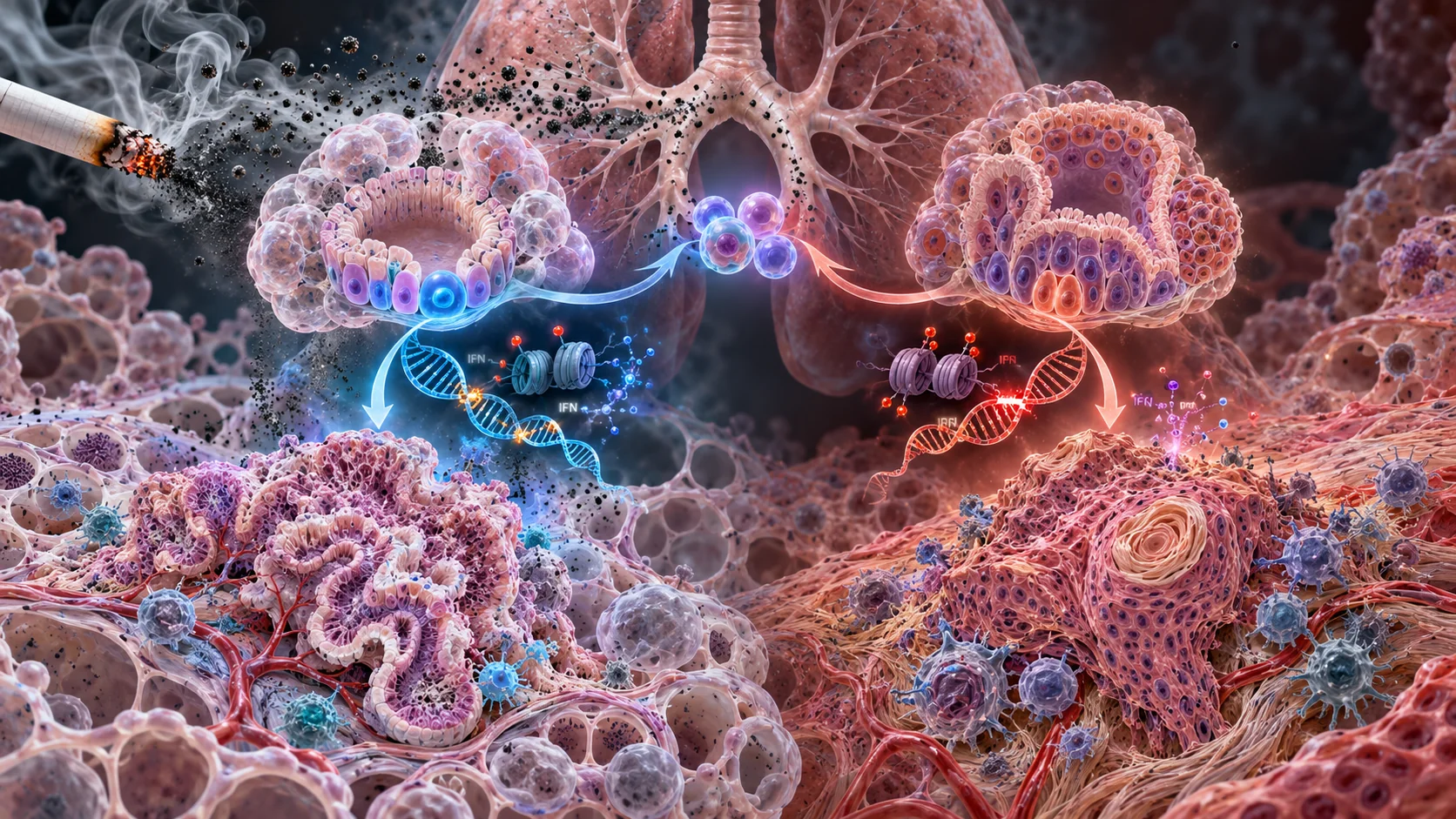
Chronic cigarette smoke exposure induces distinct stem cell states driving genetic driver-specific non-small cell lung cancer subtypes.

Cigarette smoke-induced chronic inflammation (CI) potentiates development of non-small cell lung cancer (NSCLC) by mediating genetic and epigenetic events. Using normal lung organoids (LOs), we define how chronic cigarette smoke condensate (CSC) exposure drives two separate stem cell populations to evolve premalignant states harboring progressive epigenetic and linked transcriptomic abnormalities in the absence of major driver mutations. These dynamics facilitate evolution of an immune evasive s

Continue reading
Health & Medicine

Cell identity competes with surface tension to determine stromal organization in tumor spheroids beyond the CAF shell paradigm.

Cancer-associated fibroblasts (CAFs) are often found forming a peripheral stromal barrier around tumors. Here, this paradigm is challenged using microfabricated 3D cancer-CAF spheroid models combined with quantitative magnetic force tensiometry. A surface tension atlas is established for eight cancer cell lines, three CAF populations, and heterotypic tumor-CAF assemblies, spanning nearly two orders of magnitude. Surface tension is first shown to govern spheroid morphology and modulate drug respo

Continue reading
Health & Medicine

Sexual dimorphism in epidermal stem cell dynamics.

The epidermis is a stratified epithelium comprising proliferative basal cells and differentiated suprabasal cells that are continuously renewed throughout life. Conflicting theories have been proposed regarding the heterogeneity of the basal cell layer, with some studies proposing that all proliferative cells have self-renewal potential during homeostasis 1-5 . Meanwhile, others posit a model in which stem cell differentiation occurs through an intermediate transit-amplifying-like progenitor sta

Continue reading
Health & Medicine

Engineered TYK2 dependence enables myeloid-selective IL-10 receptor agonism.

Interleukin-10 (IL-10) is a central anti-inflammatory cytokine that suppresses immune responses in myeloid cells but can also activate T cells, limiting its therapeutic use in chronic inflammatory diseases owing to narrow efficacy windows and dose-limiting toxicities 1-5 . Here we show that myeloid and T cells differ in their dependence on JAK-family kinase pairing for IL-10 signalling and function. We took advantage of this differential kinase dependence to engineer a tetravalent nanobody-based

Continue reading