Economics

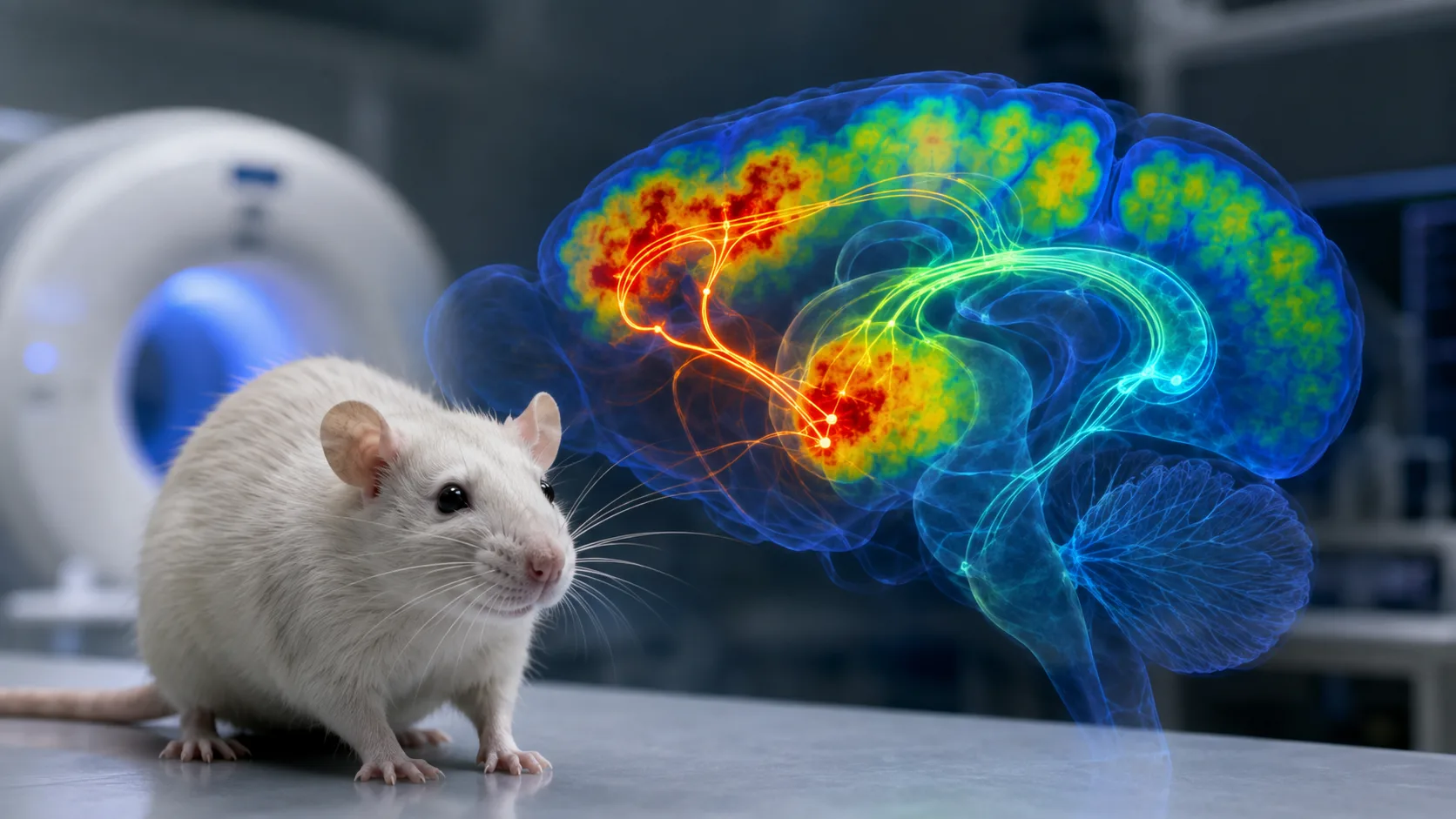
Brain metabolic correlates of heroin addiction severity during abstinence and heroin versus social seeking: A PET study in rats.
| Source: Proceedings of the National Academy of Sciences of the United States of America

Only a subset of heroin users develop addiction, characterized by binge-like heroin use and preference for heroin over other rewards, including social rewards. We recently established a rat model that captures these features. We trained rats to lever-press for social interaction and heroin (or saline, control) infusions and then tested heroin and social seeking and heroin-vs.-social choice. During 3 to 5 abstinence weeks, we used 2-deoxy-2-[ 18 F]fluoro-D-glucose (FDG) positron emission tomograp

Only a subset of heroin users develop addiction, characterized by binge-like heroin use and preference for heroin over other rewards, including social rewards. We recently established a rat model that captures these features. We trained rats to lever-press for social interaction and heroin (or saline, control) infusions and then tested heroin and social seeking and heroin-vs.-social choice. During 3 to 5 abstinence weeks, we used 2-deoxy-2-[ 18 F]fluoro-D-glucose (FDG) positron emission tomography (PET) imaging to assess regional brain metabolic activity at rest (homecage) and during heroin and social seeking. We assessed regional differences in FDG uptake using unbiased voxel-wise analysis and statistical parametric mapping, and correlated FDG uptake with principle-component-analysis-derived addiction severity score incorporating heroin intake, binge-like episodes, and heroin preference. Compared with saline-trained rats, heroin-trained rats showed overall higher FDG uptake across multiple brain regions at rest and during both reward-seeking tests. Comparison of heroin-vs.-social-seeking in heroin-trained rats showed higher uptake in claustrum/striatum and auditory cortex during social seeking. Analysis of individual differences showed that addiction severity was primarily associated with metabolic alterations under resting conditions rather than during heroin or social seeking. At rest, higher addiction severity was associated with lower uptake in piriform cortex and higher uptake in ventral hippocampus, whereas during heroin seeking, addiction severity was associated with lower uptake in postsubiculum and cerebellum. Addiction severity was not associated with differences in social measures or FDG uptake during social-seeking. These findings identify brain metabolic features of heroin addiction vulnerability in a rat model that may serve as brain biomarkers of human opioid addiction.


Read the original source →

Related Topics

Related Stories

Economics

Ancient DNA challenges to admixture narratives: Insights from Notre-Dame Cemetery (1683-1796) in Colonial Montreal, Canada.

Historical narratives of early colonization in Quebec frequently portray French-Indigenous relations as cooperative and characterized by admixture; which are often mobilized in modern debates on false-indigeneity. These narratives have been studied through genealogical, genetic, and bioarchaeological analyses, yet individuals of African descent remain mostly absent from them, while Indigenous peoples are framed largely in relation to colonists. Notre-Dame Cemetery (1683-1796) in Tiohtià:ke-

Continue reading
Economics

Understanding consciousness (biological and artificial) as a society of self-schemas.

This article argues that human cognition is more than the performance of functions such as memory, decision-making, and attention. The brain also builds schematic models of those cognitive functions and uses those models to monitor, predict, and partially control them. When you introspect, your understanding of who you are and what is happening inside of you is derived from those schematic, sometimes inaccurate, but generally useful models, rather than from the actual cognitive functions that ar

Continue reading
Economics

Educational intervention can rewire village social networks.

Social networks shape behaviour, affect information dissemination and undergird collective action. And they can be exploited in the design of interventions in these domains 1-7 . Although social networks obey fundamental principles, such as the degree distribution 8,9 , they can nevertheless evolve as ties form and break. Here, through a randomized controlled trial involving a total of 8,331 people in 110 remote Honduran villages, we evaluate the secondary effects of a 22-month public-health int

Continue reading
Economics

Hyperfunction of PSD-95 leads to hyperexcitability and cognitive abnormalities in MEF2C haploinsufficiency.

Myocyte enhancer factor 2C (MEF2C) is a transcription factor critical for brain circuit development and cognitive behavior. The loss of one copy of MEF2C leads to MEF2C haploinsufficiency syndrome (MCHS), a neurodevelopmental disorder characterized by intellectual disability, epilepsy, and behavioral phenotypes associated with autism spectrum disorders. Given that numerous genes are regulated by MEF2C, the neuronal and behavioral deficits in MCHS are complex, and there is currently no effective

Continue reading
Economics

Interventions to mitigate post-infection morbidity: Management insights from simple models.

A variety of pathogens that cause acute disease can also affect their host long after recovery. These post-infection effects lead to elevated costs for individuals and societies, which can be mitigated by large-scale interventions. Here, we examine the management of post-infection morbidity with mathematical models. First, we show that long-term usage of nonpharmaceutical interventions can reduce post-acute burden. Second, to investigate how post-infection effects affect optimal vaccination cove

Continue reading