Iron or Multiple Micronutrient Powder Supplements With Malaria Chemoprevention in Rural Malawian Children: The IRMA Randomized Clinical Trial.
The World Health Organization recommends universal preventive iron interventions for young children in anemia-prevalent areas to alleviate the effects of anemia on child neurodevelopment and other outcomes. However, the functional benefits have not been confirmed in randomized clinical trials and there are concerns that iron interventions may increase infection risk. To determine whether universal iron interventions administered with malaria chemoprevention improve child functional outcomes and
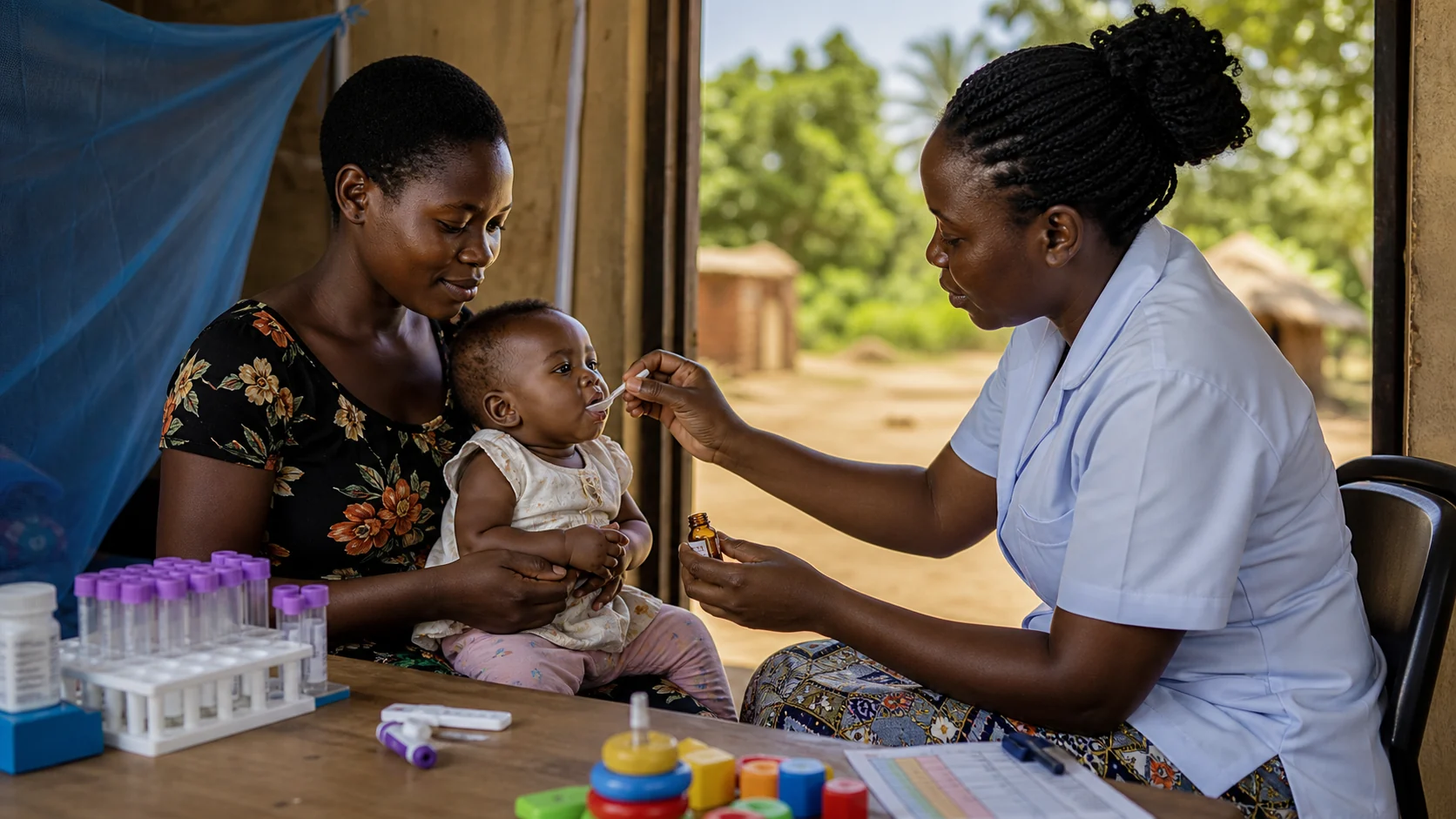
The World Health Organization recommends universal preventive iron interventions for young children in anemia-prevalent areas to alleviate the effects of anemia on child neurodevelopment and other outcomes. However, the functional benefits have not been confirmed in randomized clinical trials and there are concerns that iron interventions may increase infection risk. To determine whether universal iron interventions administered with malaria chemoprevention improve child functional outcomes and are safe regarding infection risk. This randomized clinical trial enrolled 6-month-old infants at 4 centers in southern Malawi, which is a rural, malaria-endemic setting. Enrollment occurred between April 2020 and October 2021. The final assessment was completed in October 2022. Six months of (1) iron syrup and malaria chemoprevention (n = 542), (2) iron-containing micronutrient powders and malaria chemoprevention (n = 543), (3) malaria chemoprevention alone (n = 541), or (4) placebo alone (n = 542). Children were assessed after the 6-month intervention period and after 6-month follow-up. The primary outcome was the Cognitive Scale composite score at the end of the intervention period using the Bayley Scales of Infant and Toddler Development-Third Edition (Bayley-III). The secondary outcomes included Bayley-III Language Scale and Motor Scale composite scores, anemia prevalence, and concentrations of hemoglobin and ferritin. The primary and secondary outcomes were measured when children were 1 year of age and when they were 18 months of age. The safety outcomes included incidence of infection (including malaria). A total of 2168 infants (mean age, 5.7 months; 49% were female; and 71% had anemia) were recruited to participate. Compared with malaria chemoprevention alone, there was no between-group difference in the Bayley-III Cognitive Scale composite score for iron syrup and malaria chemoprevention (mean difference [MD], -0.52 [95% CI, -2.52 to 1.48]). Compared with malaria chemoprevention alone, there was no between-group difference in the Bayley-III Cognitive Scale composite score for iron-containing micronutrient powders and malaria chemoprevention (MD, -0.85 [95% CI, -2.80 to 1.09]). Compared with placebo alone, there was no between-group difference in the Bayley-III Cognitive Scale composite score for malaria chemoprevention alone (MD, 1.62 [95% CI, -0.31 to 3.55]). Although the 2 iron interventions increased ferritin concentration, neither reduced anemia prevalence compared with malaria chemoprevention alone. Compared with malaria chemoprevention alone, neither iron syrup and malaria chemoprevention nor iron-containing micronutrient powders and malaria chemoprevention increased malaria risk. Compared with placebo alone, malaria chemoprevention alone reduced the incidence of malaria. Two universal, 6-month iron interventions with malaria chemoprevention did not improve cognitive outcomes among children in Malawi. anzctr.org.au Identifier: ACTRN12620000386932.