Environment

Visible light leaves evaporation and interfacial structure of neat water unchanged at the air-water interface.
| Source: Proceedings of the National Academy of Sciences of the United States of America

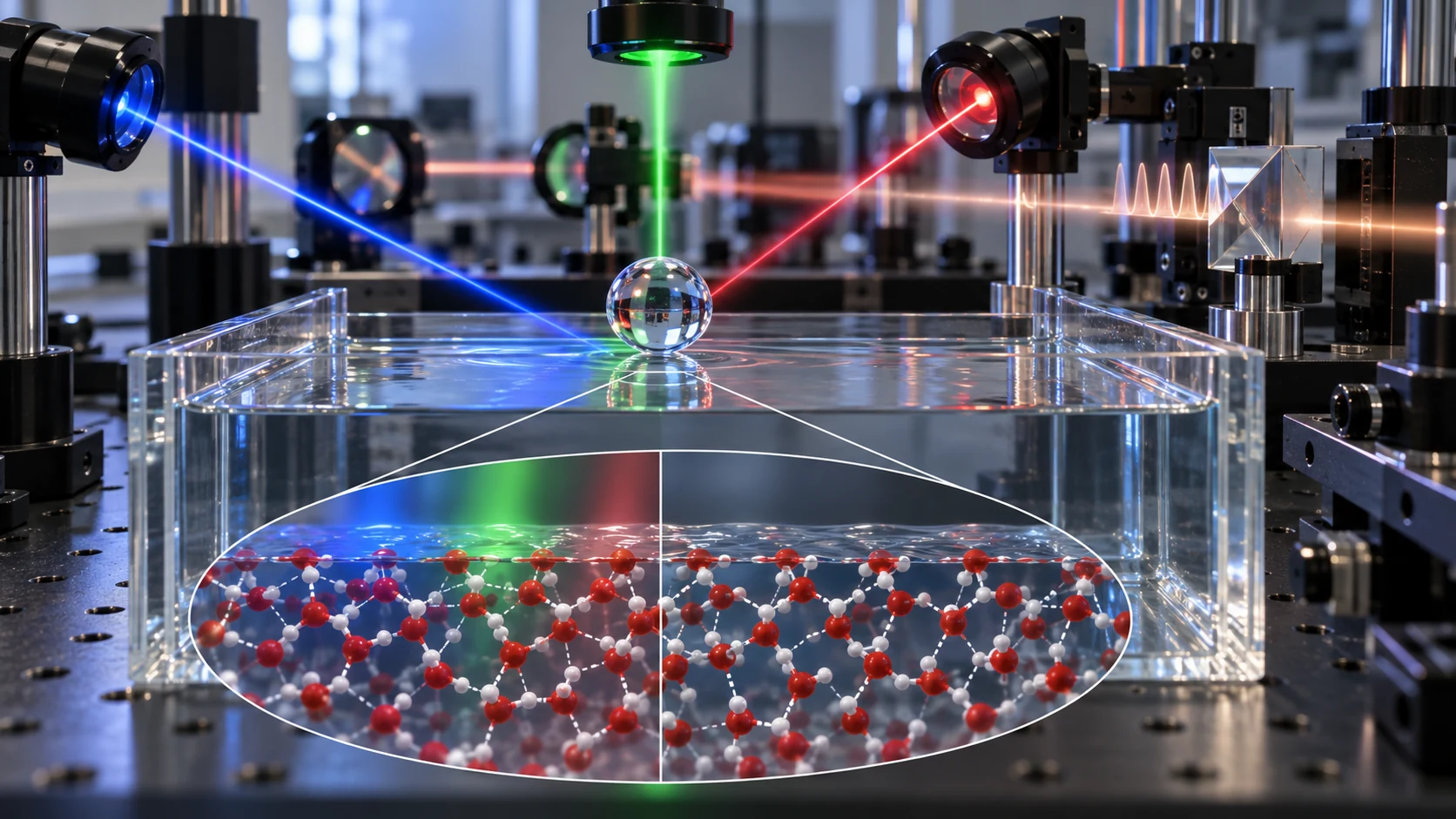
Visible light-induced "photomolecular" enhancement of water evaporation has been proposed as a fundamentally new mode of light-matter interaction at aqueous interfaces, with far-reaching implications for climate processes and light-driven water technologies. Yet, the response of neat interfacial water to visible photons has not been directly quantified at both macroscopic and molecular scales. Here, we combine high-precision confocal displacement measurements with a surface-specific vibrational

Visible light-induced "photomolecular" enhancement of water evaporation has been proposed as a fundamentally new mode of light-matter interaction at aqueous interfaces, with far-reaching implications for climate processes and light-driven water technologies. Yet, the response of neat interfacial water to visible photons has not been directly quantified at both macroscopic and molecular scales. Here, we combine high-precision confocal displacement measurements with a surface-specific vibrational probe that detects the OH-stretch vibrations of interfacial water molecules with subnanometer depth sensitivity, allowing us to resolve even subtle blue shifts of the hydrogen-bonded continuum and changes in the amplitude and position of the free-OH peak that report on interfacial hydrogen-bond strength and molecular orientation. This approach enables us to track both evaporation kinetics and molecular structure at the air-water boundary. Continuous 450, 532, and 635 nm illumination leaves the macroscopic evaporation rate unchanged over a wide range of humidities, while the interfacial vibrational spectra show no detectable modification of water hydrogen-bonding or molecular orientation under identical environmental conditions. To directly test a nonthermal, field-driven mechanism, we further exposed the interface to femtosecond visible and near-infrared pulses spanning 515, 800, and 1030 nm; the peak intensities were increased by more than ten orders of magnitude, and no structural change was observed. Together, these measurements show that the neat air-water interface is remarkably insensitive to visible irradiation, implying that any substantial light-enhanced evaporation is most consistent with photothermal or geometric effects in complex materials rather than from a new, nonthermal and nonresonant pathway intrinsic to liquid water.


Read the original source →

Related Stories

Environment

Nutrient legacies from elephant megacarcasses create coldspots of biodiversity and hotspots of ecosystem processes.

Terrestrial megafauna (animals >1,000 kg) have substantial impacts on ecosystems while alive; yet, we know little about the impacts of these ecosystem engineers after they die. Like whale carcasses in the ocean, terrestrial megacarcasses may leave ecological legacies via the nutrient pulses they create on the landscape. Here, we investigated the impact of elephant megacarcasses on savanna ecosystems in Kruger National Park, South Africa. To determine how elephant carcasses affect below- and a

Continue reading
Environment

Maternal ranging strategies facilitate offspring social play at energetic cost in the most solitary ape.

In most vertebrates, social play among peers is considered essential for behavioral development. Yet in solitary species bearing single offspring, opportunities for social play are inherently scarce. Whether mothers of such species actively facilitate play opportunities for their offspring, and at what cost, remains unknown. We used 15 y of behavioral and movement data (∼32,600 observation hours) from 31 wild Bornean orangutan ( Pongo pygmaeus wurmbii ) mother-offspring pairs to test whet

Continue reading
Environment

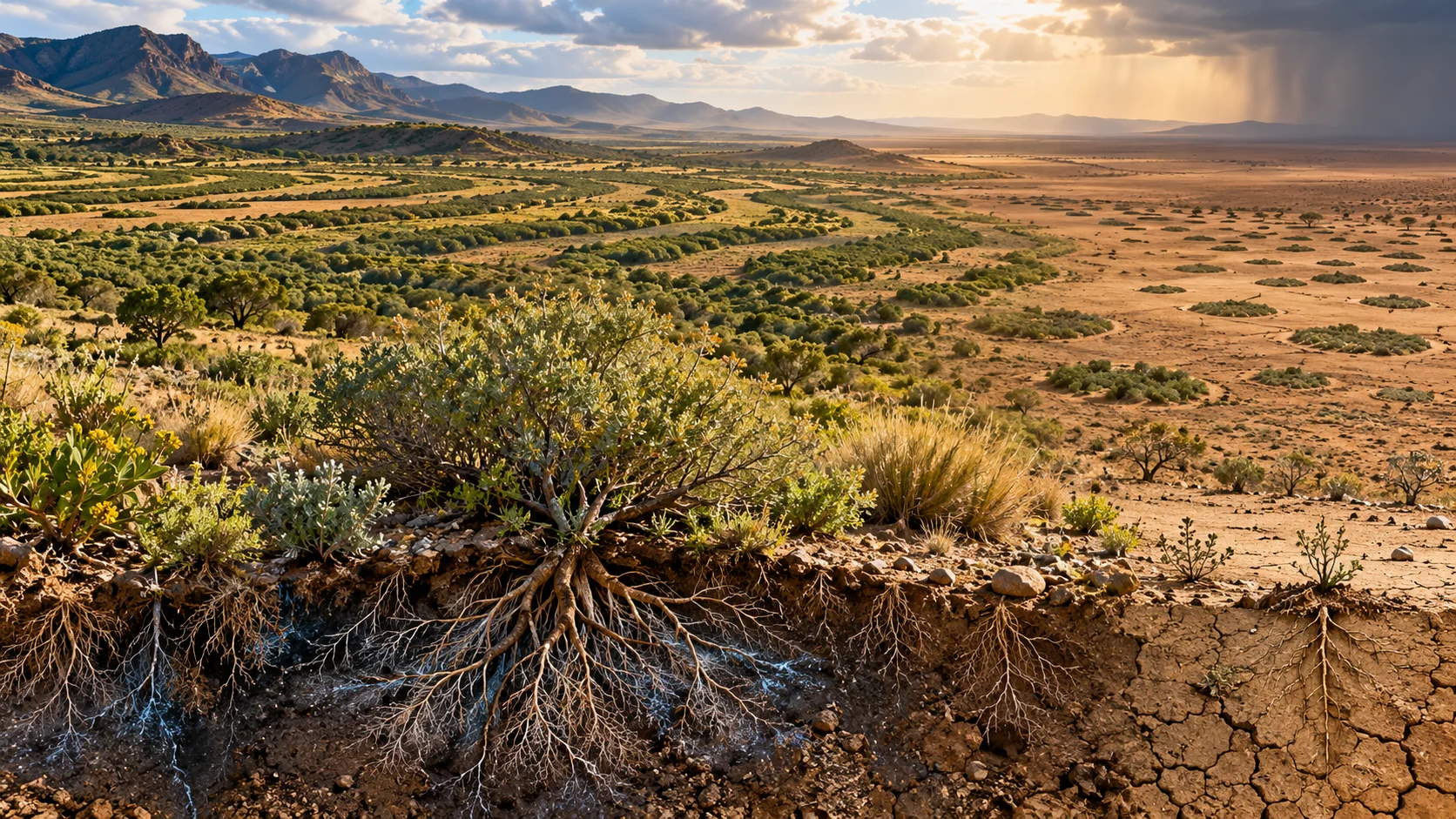
Evolution shapes ecosystem resilience through spatial self-organization.

Drylands are globally widespread and ecologically important but vulnerable to climate change. Many exhibit spatially self-organized vegetation patterns that enhance resilience by enabling vegetation to reorganize their patterns under drying, thereby optimizing water use and maintaining productivity. Plants can also undergo evolution in response to environmental change. Although both spatial self-organization and rapid evolution are fundamental mechanisms of resilience, their interaction remains

Continue reading
Environment

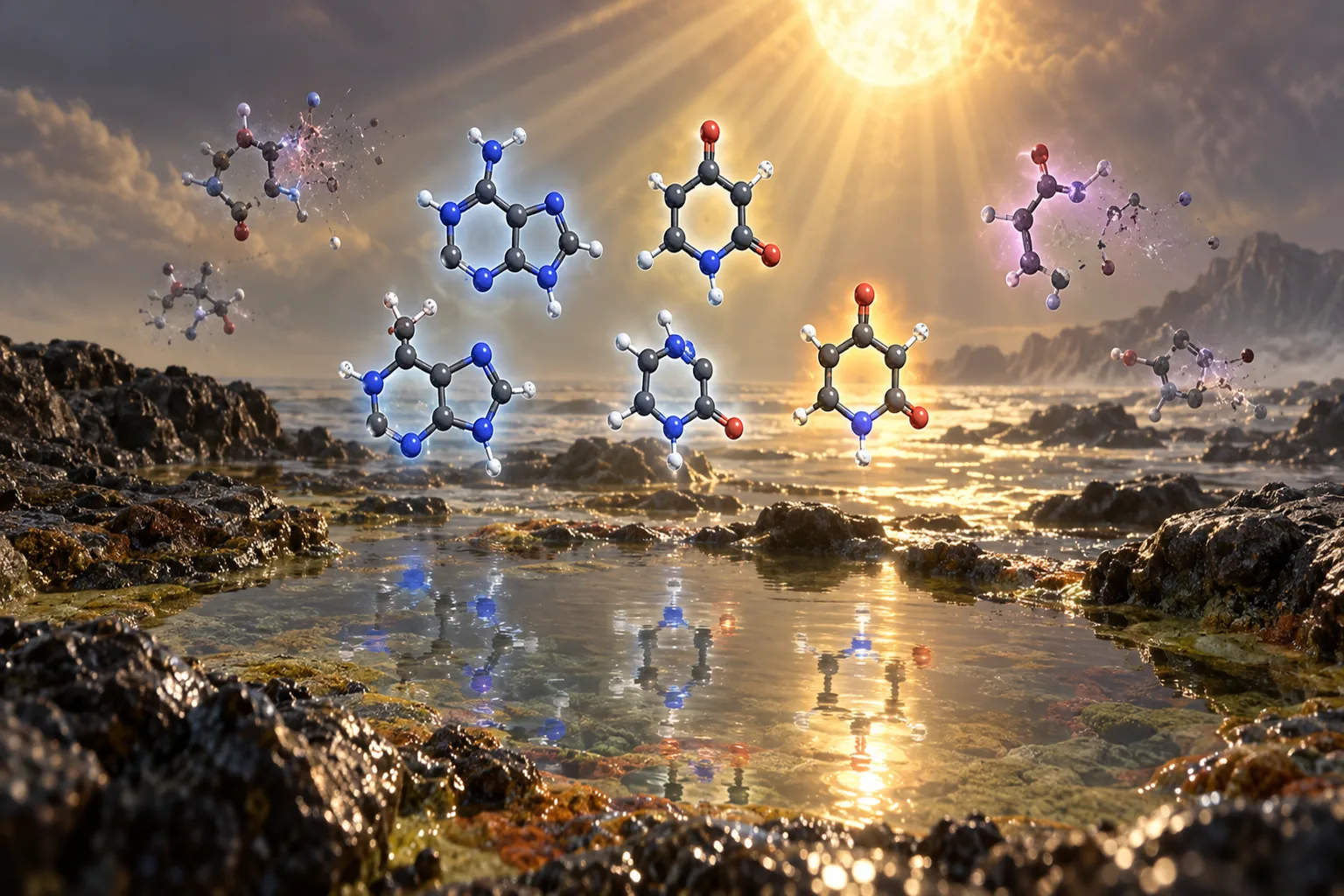
Continuous UV irradiation played an inconclusive role in selecting the canonical genetic alphabet.

An abundance of heterocyclic molecules analogous to canonical nucleobases (i.e., adenine, thymine, guanine, cytosine, and uracil) used as the genetic alphabet in DNA and RNA could have been present in various prebiotic environments on early Earth. However, extant biology generally uses the canonical nucleobases and nucleosides as the genetic alphabet, and not any number of possible noncanonical counterparts. Ultraviolet (UV) irradiation was likely abundant on the surface of the early Earth and h

Continue reading
Environment

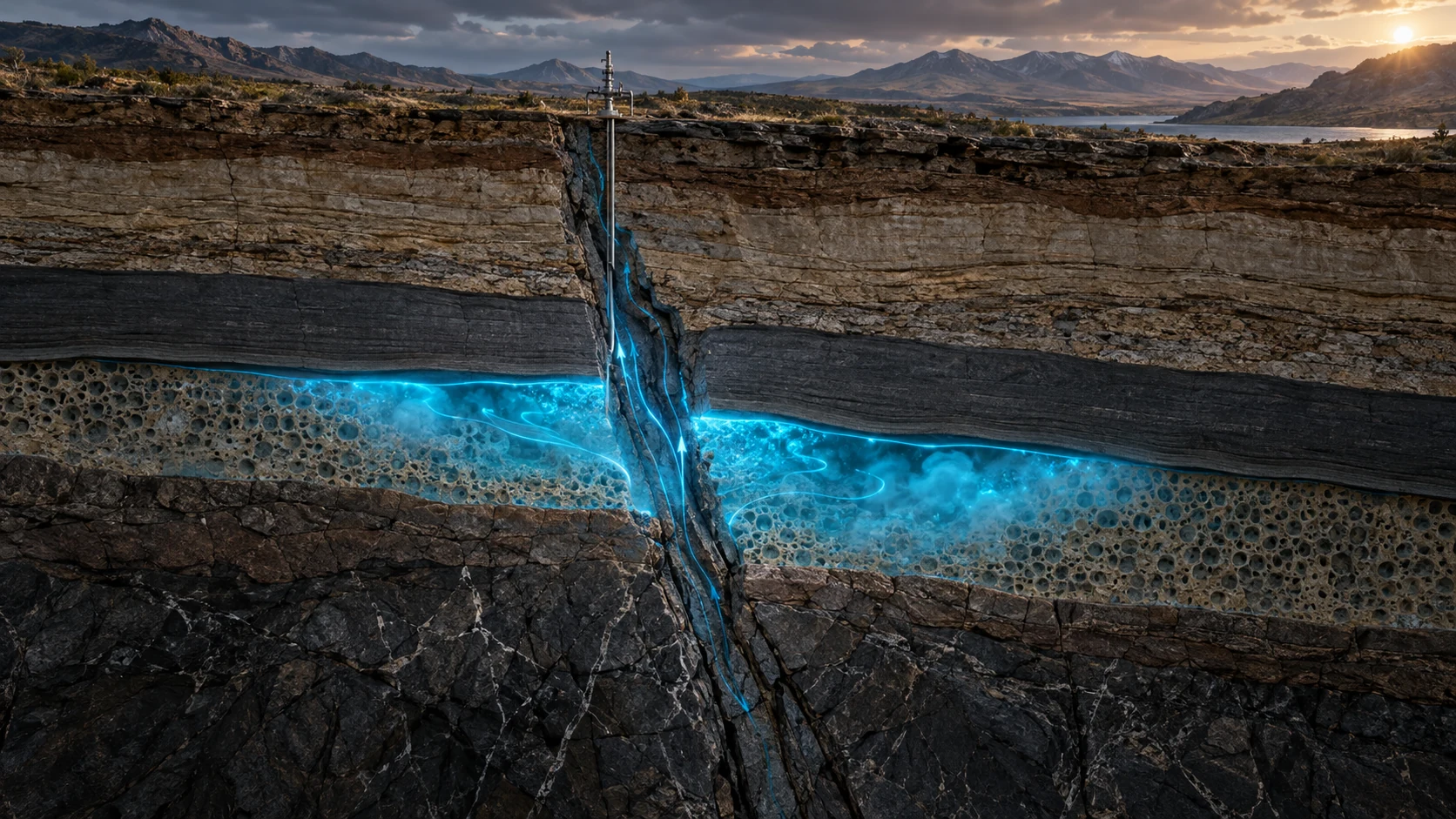
Fault-controlled natural hydrogen reservoirs as underground hydrogen storage sites.

Underground hydrogen storage requires geological formations with demonstrated hydrogen containment, yet no conventional storage candidate (salt caverns, aquifers, or depleted hydrocarbon reservoirs) offers direct, prior evidence of H 2 -specific sealing. We propose that subcommercial natural hydrogen reservoirs, where H 2 has accumulated over geological timescales, can serve as precertified storage sites. This proposition is evaluated using the Bulqizë fault-controlled natural H 2 reservoir

Continue reading