Environment
Evolution shapes ecosystem resilience through spatial self-organization.
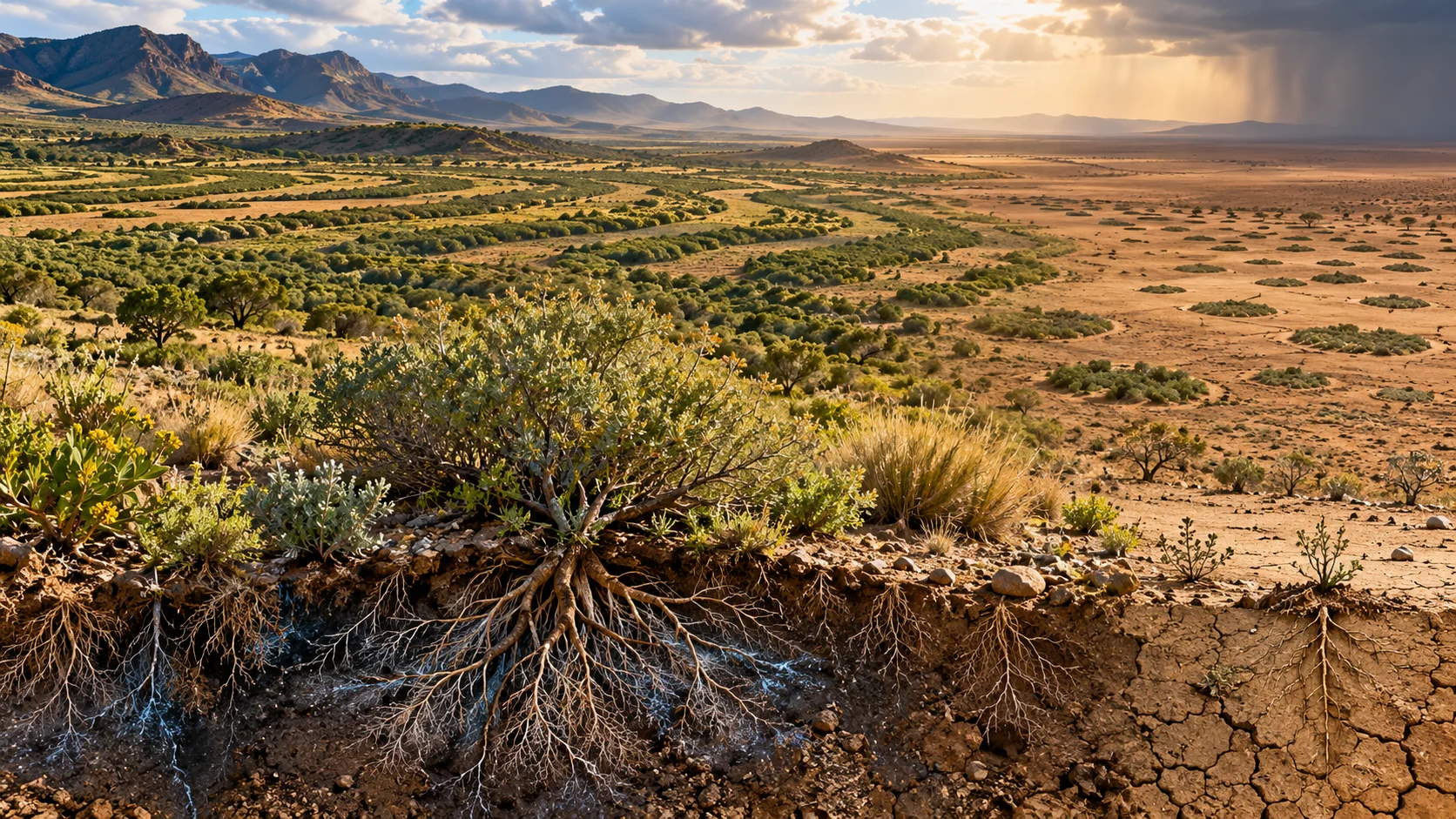
Drylands are globally widespread and ecologically important but vulnerable to climate change. Many exhibit spatially self-organized vegetation patterns that enhance resilience by enabling vegetation to reorganize their patterns under drying, thereby optimizing water use and maintaining productivity. Plants can also undergo evolution in response to environmental change. Although both spatial self-organization and rapid evolution are fundamental mechanisms of resilience, their interaction remains
Continue reading