Topic: Space & Astronomy

Health & Medicine

Population-scale reconstruction of menopause dynamics reveals a physiological cliff at the final menstrual period.

Menopause reshapes female physiology, yet current understanding is limited by small longitudinal cohorts that characterize it as a gradual transition. Large-scale biomedical datasets remain underutilized because the final menstrual period (FMP) age is rarely recorded. Here we present a computational framework, inspired by astronomy, that reconstructs FMP-anchored trajectories from cross-sectional data by removing the blurring caused by variation in FMP age across individuals. Applying this to tw

Continue reading

Physical/Tech

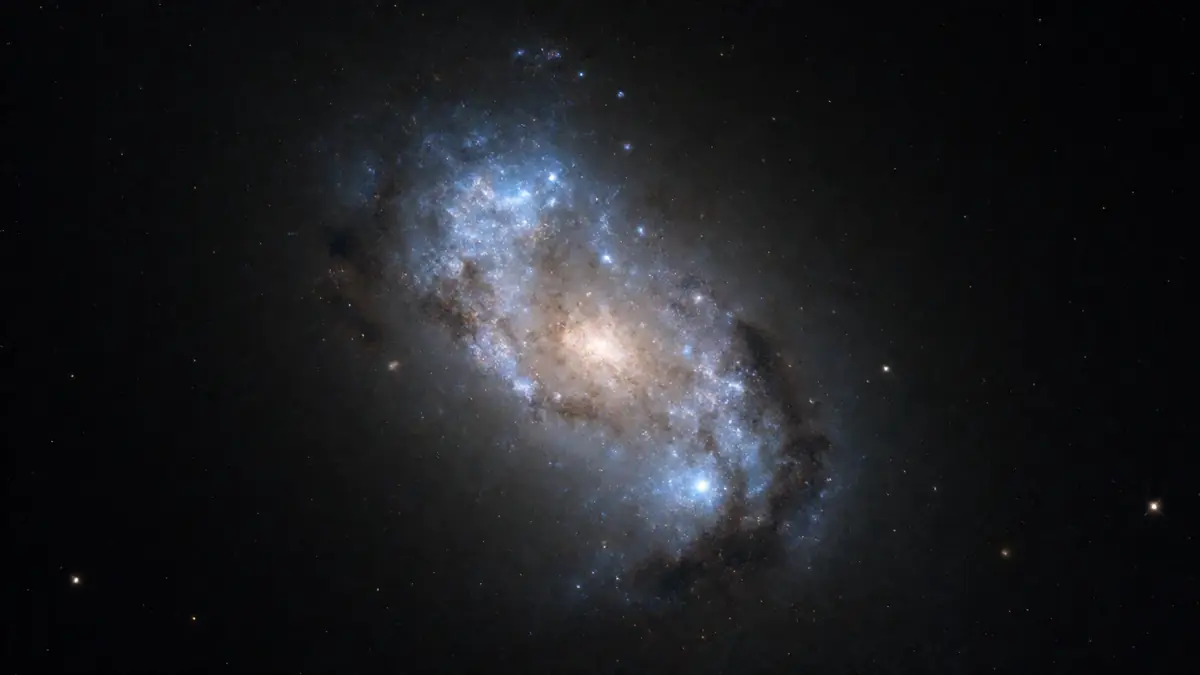
A fast radio burst at redshift 2, three billion years after the Big Bang.

Fast radio bursts (FRBs) are millisecond-duration radio transients from extragalactic sources. Their frequency and polarization properties are affected by plasma and magnetic fields along the line of sight to Earth. We report radio observations of FRB 20240304B and near-infrared follow-up to identify its host galaxy. The host is a low-mass, clumpy, star-forming galaxy at redshift 2.148 ± 0.0013, corresponding to 3 billion years after the Big Bang. This FRB occurred during the peak of cosmic

Continue reading
Health & Medicine

Peptides adopt stable omega-loop structures in concentrated sulfuric acid.

The search for life beyond Earth has focused on planets and moons with liquid water, reflecting the assumption that complex biomolecules require aqueous environments to remain stable and functional. Such a view excludes a wide class of planetary settings, including the concentrated sulfuric acid clouds of Venus, where extreme acidity and minimal water are thought to preclude molecular structure despite suitable temperatures. A growing body of evidence shows that a wide range of organic molecules

Continue reading
Physical/Tech

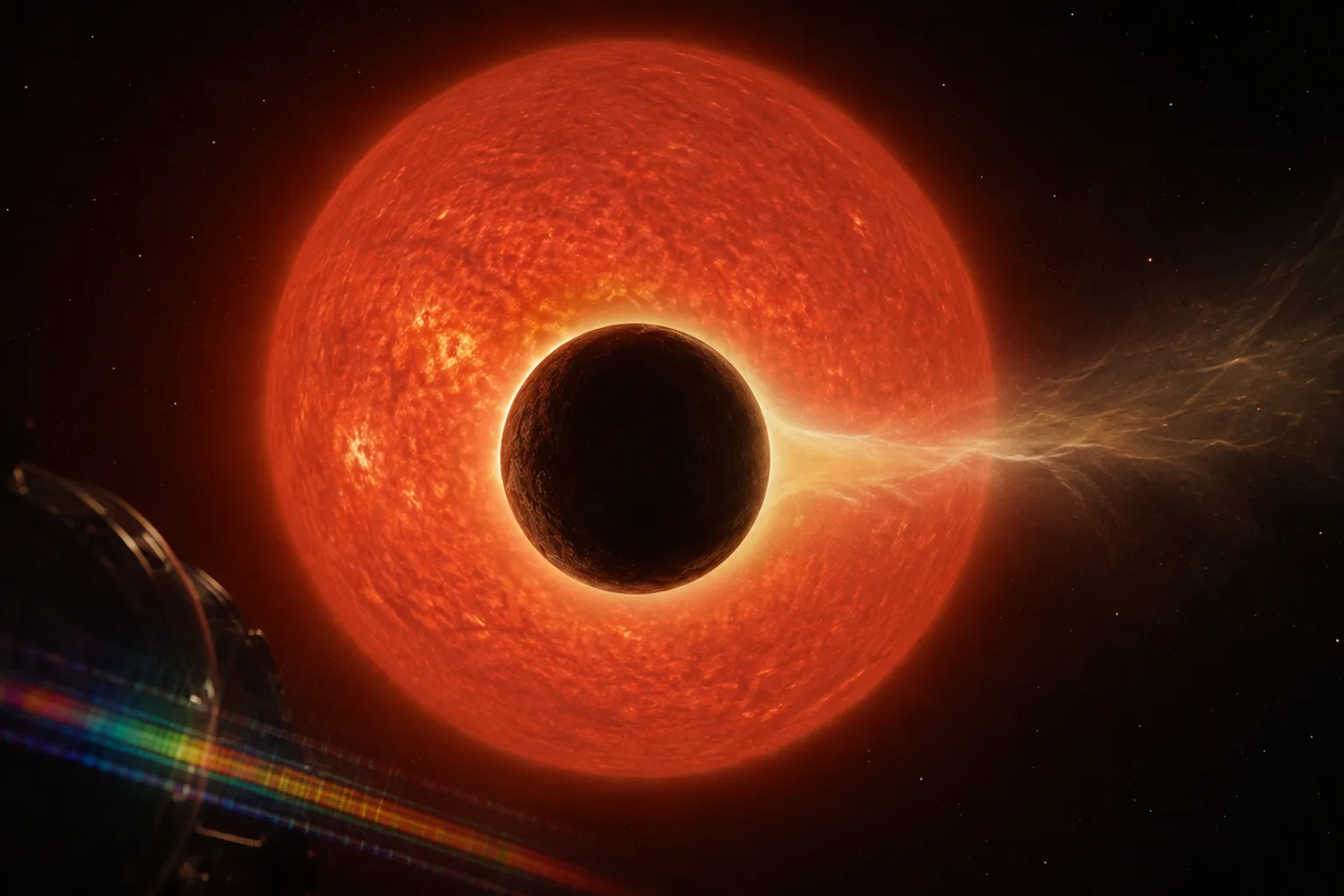
Helium escaping from the atmosphere of a nearby rocky exoplanet orbiting in a habitable zone

Observations of highly irradiated gas giant exoplanets have shown helium escaping from their atmospheres. There is limited evidence for atmospheres on rocky exoplanets, perhaps because they have already escaped. We report near-infrared spectroscopic observations of LHS 1140b, a rocky exoplanet that orbits in the habitable zone of a nearby low-mass star. The transit spectra show absorption by helium escaping from the planet’s atmosphere. Helium absorption is detected in 2024 but not in 2025, indi

Continue reading