Sacituzumab tirumotecan versus treatment of physician's choice in previously treated endometrial cancer (TroFuse-005/ENGOT-en23/GOG-3095): a randomised, open-label, phase 3 trial.

Therapeutic options for patients with endometrial cancer who progress after platinum-based chemotherapy and immunotherapy are scarce, and prognosis is poor. Sacituzumab tirumotecan (sac-TMT) is a trophoblast cell-surface antigen 2-directed antibody-drug conjugate with a unique, bifunctional linker that maximises delivery of a belotecan-derived topoisomerase I inhibitor payload to tumour cells. This study aimed to compare sac-TMT with the treatment of physician's choice (TPC) in patients with end
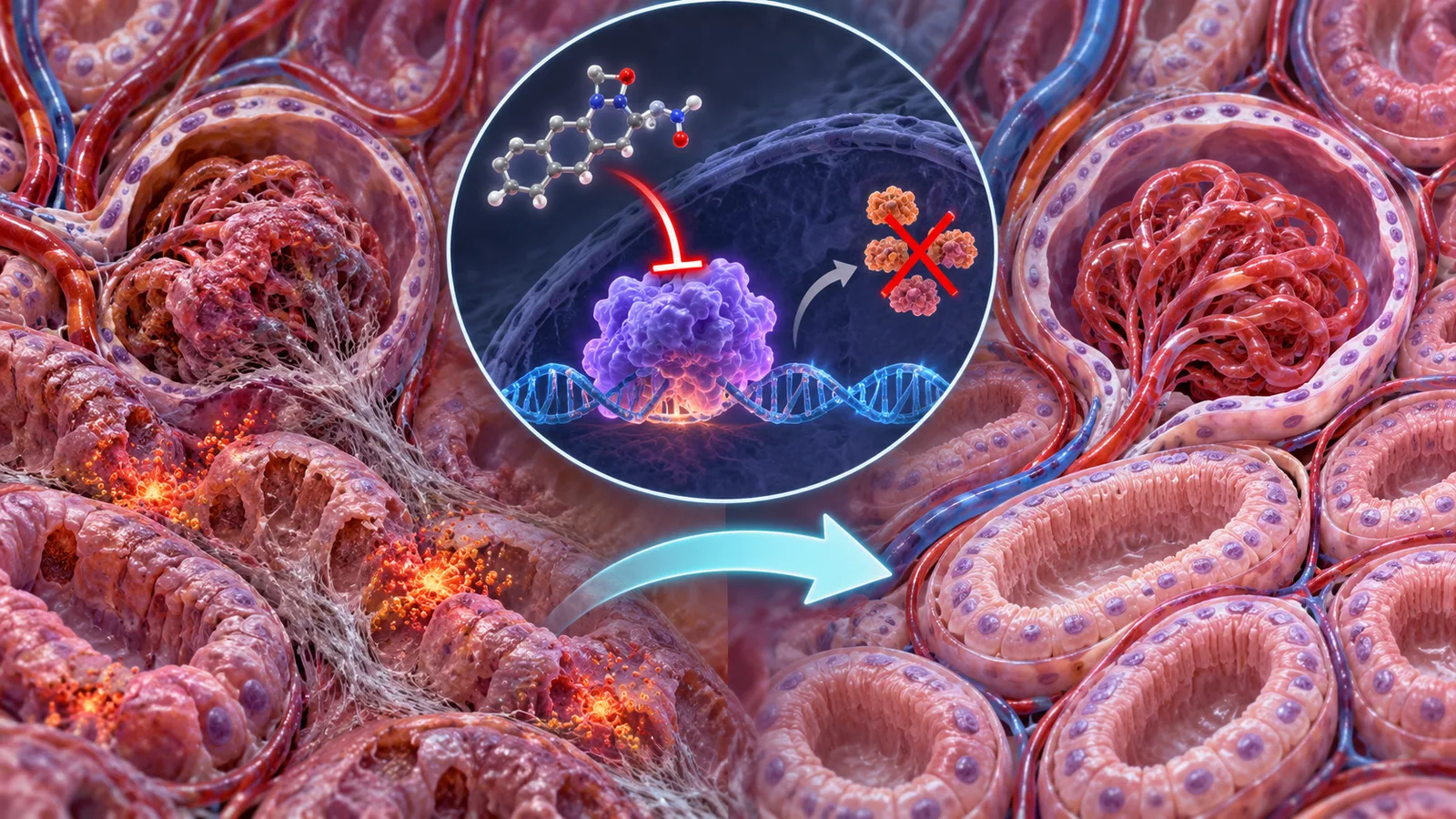
Therapeutic options for patients with endometrial cancer who progress after platinum-based chemotherapy and immunotherapy are scarce, and prognosis is poor. Sacituzumab tirumotecan (sac-TMT) is a trophoblast cell-surface antigen 2-directed antibody-drug conjugate with a unique, bifunctional linker that maximises delivery of a belotecan-derived topoisomerase I inhibitor payload to tumour cells. This study aimed to compare sac-TMT with the treatment of physician's choice (TPC) in patients with endometrial cancer who had been previously treated with platinum-based chemotherapy and immunotherapy. In this randomised, open-label, phase 3 trial, patients were recruited from 242 gynaecological oncology centres across 31 countries and regions. Participating centres were selected based on established expertise in gynaecological oncology and an adequate volume of potentially eligible patients. Eligible patients were female and aged 18 years or older with histologically confirmed advanced or recurrent endometrial carcinoma or carcinosarcoma, who had received up to three previous lines of therapy, including systemic platinum-based chemotherapy and anti-programmed death 1 or anti-programmed death ligand 1 therapy. Patients were randomly assigned (1:1) via central interactive response technology to receive intravenous sac-TMT (4 mg/kg on days 1 and 15 of each 28-day cycle) or TPC (intravenous doxorubicin 60 mg/m 2 every 3 weeks or intravenous paclitaxel 80 mg/m 2 on days 1, 8, and 15 of each 28-day cycle). Investigators and patients were not masked to treatment; radiologists performing blinded independent central review were fully masked. Randomisation was stratified by mismatch repair status (deficient vs proficient), trophoblast cell-surface antigen 2 expression by immunohistochemistry (TROP2 EPR20043 Formulation Locked Assay [Roche Tissue Diagnostics, Tucson, AZ, USA]; low [0% to <50% of tumour cells with moderate (2+) or strong (3+) membrane staining intensity] vs medium-high [≥50% tumour cells with moderate (2+) or strong (3+) membrane staining intensity]), number of previous lines of systemic therapy (≤2 vs 3), and baseline disease status per Response Evaluation Criteria in Solid Tumors (version 1.1) by blinded independent central review (measurable vs non-measurable). Dual primary endpoints were progression-free survival per Response Evaluation Criteria in Solid Tumors (version 1.1) assessed by blinded independent central review and overall survival, analysed in the intention-to-treat population. The data cutoff date was March 23, 2026. Progression-free survival and overall survival were evaluated as dual primary endpoints using a graphical multiple-testing approach with prespecified alpha allocation. Progression-free survival was assessed every 8 weeks through to week 56, then every 12 weeks thereafter; overall survival was assessed continuously. The safety analysis included all randomly assigned patients who received at least one dose of study treatment. For progression-free survival, missing radiographic assessments were handled using prespecified censoring rules; no imputation was performed for missing overall survival or safety data. The trial was registered on ClinicalTrials.gov (NCT06132958) and is ongoing. Between Jan 5, 2024, and Sept 17, 2025, 776 patients were randomly assigned to sac-TMT (n=386) or TPC (n=390). 384 (99%) of 386 patients in the sac-TMT group and 367 (94%) of 390 in the TPC group received at least one dose of study treatment. At data cutoff, median follow-up was 14·0 months (IQR 11·0-16·9). Median progression-free survival was 7·2 months (95% CI 5·6-7·6) in the sac-TMT group and 3·9 months (3·7-5·3) in the TPC group (hazard ratio 0·59 [95% CI 0·50-0·70]; p<0·0001) and median overall survival was 19·0 months (16·1-not reached) in the sac-TMT group and 12·1 months (11·0-15·2) in the TPC group (0·68 [0·55-0·84]; p=0·0001). 265 (69%) of 384 patients in the sac-TMT group and 210 (57%) of 367 in the TPC group had a grade 3 or higher adverse event. Serious adverse events were reported in 133 (35%) patients in the sac-TMT group and 117 (32%) patients in the TPC group. Treatment-related adverse events led to death in three (<1%) patients in the sac-TMT group and three (<1%) in the TPC group. Sac-TMT significantly improved progression-free survival and overall survival versus TPC in patients with advanced or recurrent endometrial cancer previously treated with platinum-based chemotherapy and immunotherapy. These findings support sac-TMT as a new standard of care for patients with endometrial cancer who have received chemotherapy and immunotherapy and have few effective treatment options. Merck Sharp & Dohme.